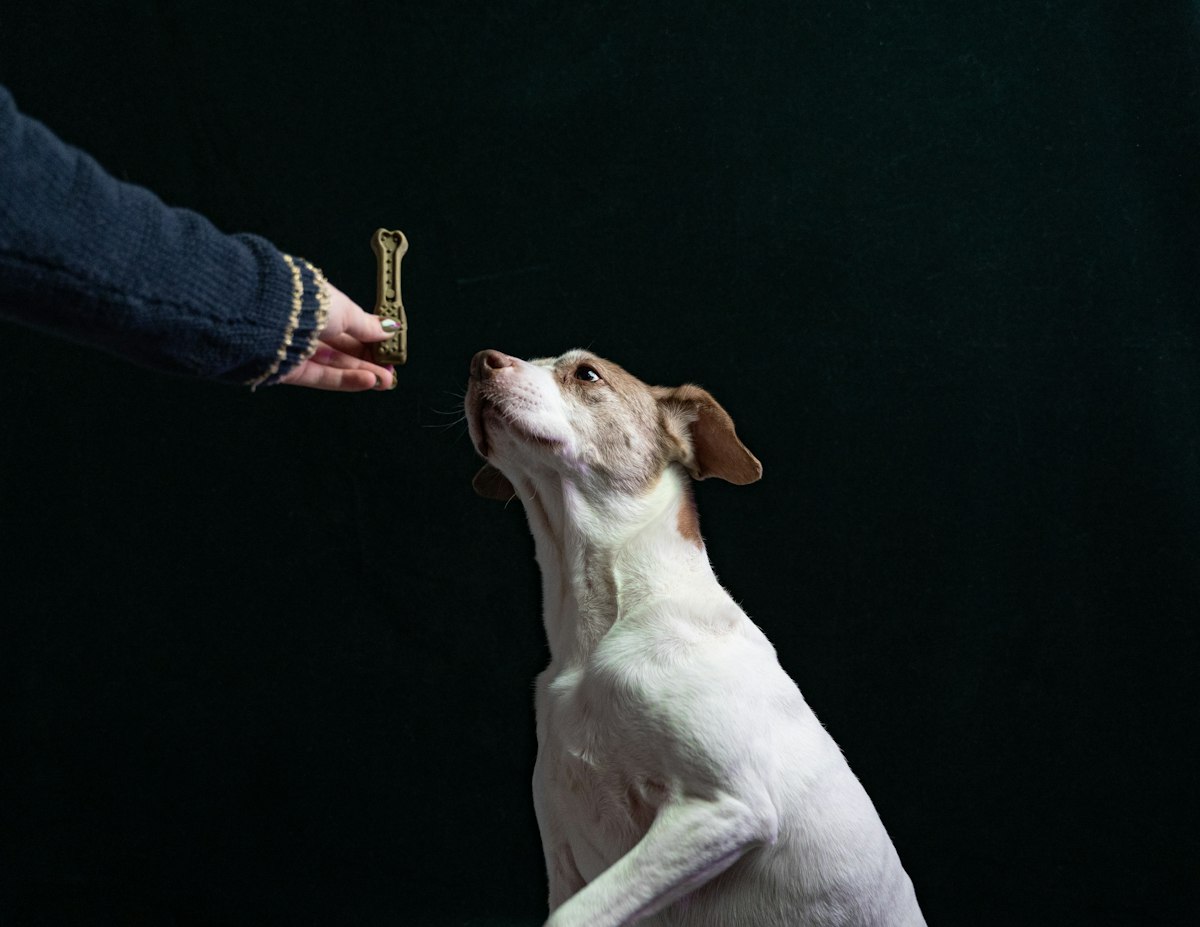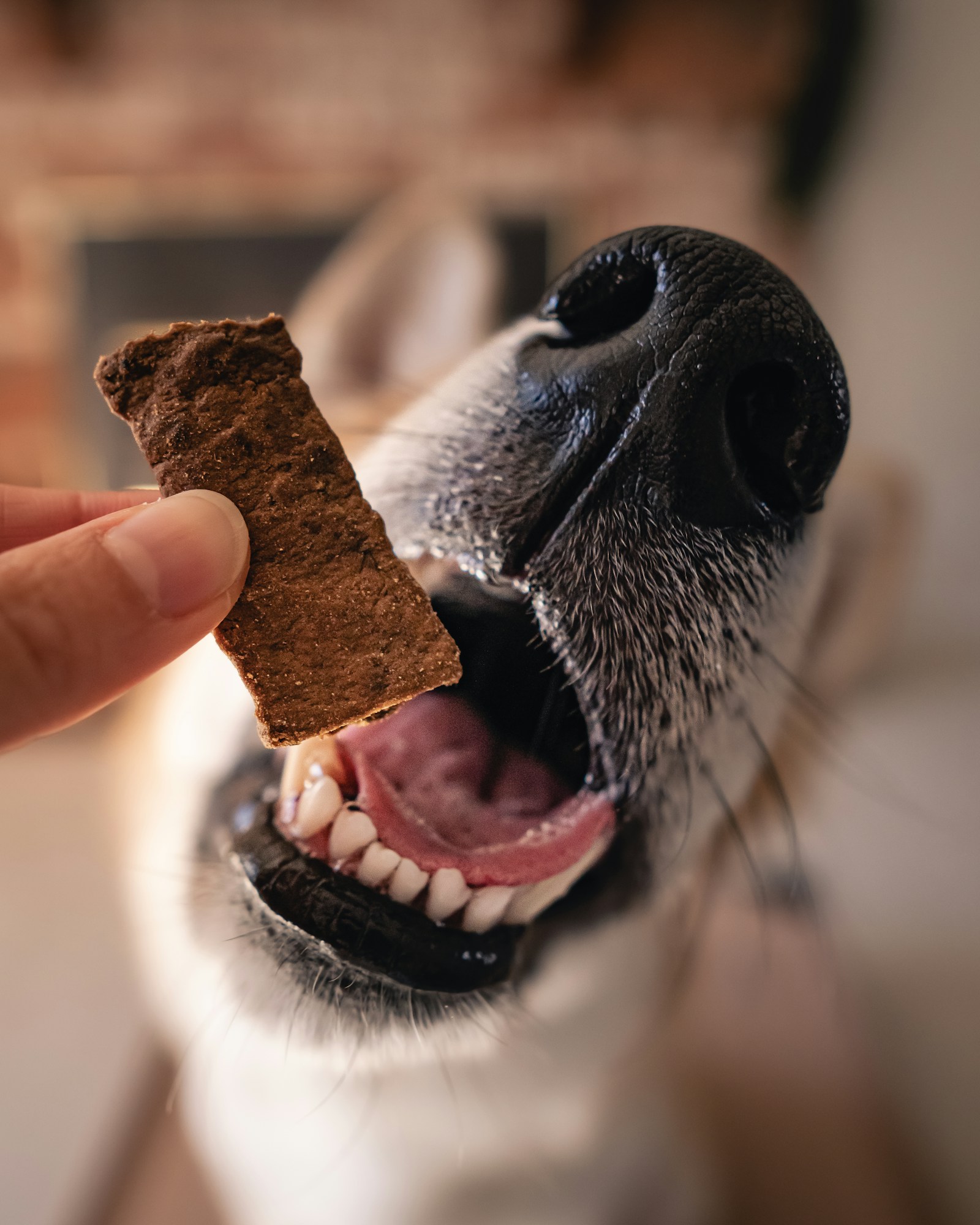
Treats are one of the most useful tools in dog training. The best ones are small, soft and tasty enough to hold your dog's attention. This guide covers what to look for, how to use them and how to keep the calories under control.
Size and texture
Training uses many repetitions, so small treats are best. Aim for pieces about the size of a pea for most dogs. Soft treats can be swallowed quickly, so your dog stays focused on you instead of crunching. Hard biscuits can be broken into smaller bits.
Value matters
Use everyday treats for easy tasks at home, and special ones, such as freeze-dried meat, for hard situations like distractions outside. Your dog will tell you which they prefer.
Check the label
- Look for a clear ingredient list, with named ingredients first.
- Check the treat is made for dogs and suitable for your dog's size and age.
- If your dog has allergies or a special diet, speak to your veterinarian before changing treats.
Control the calories
Treats should be a small part of the daily food. If you do a long session, reduce the dinner portion a little. Cut treats into small pieces, and keep some sessions to dry kibble.
Handy accessories
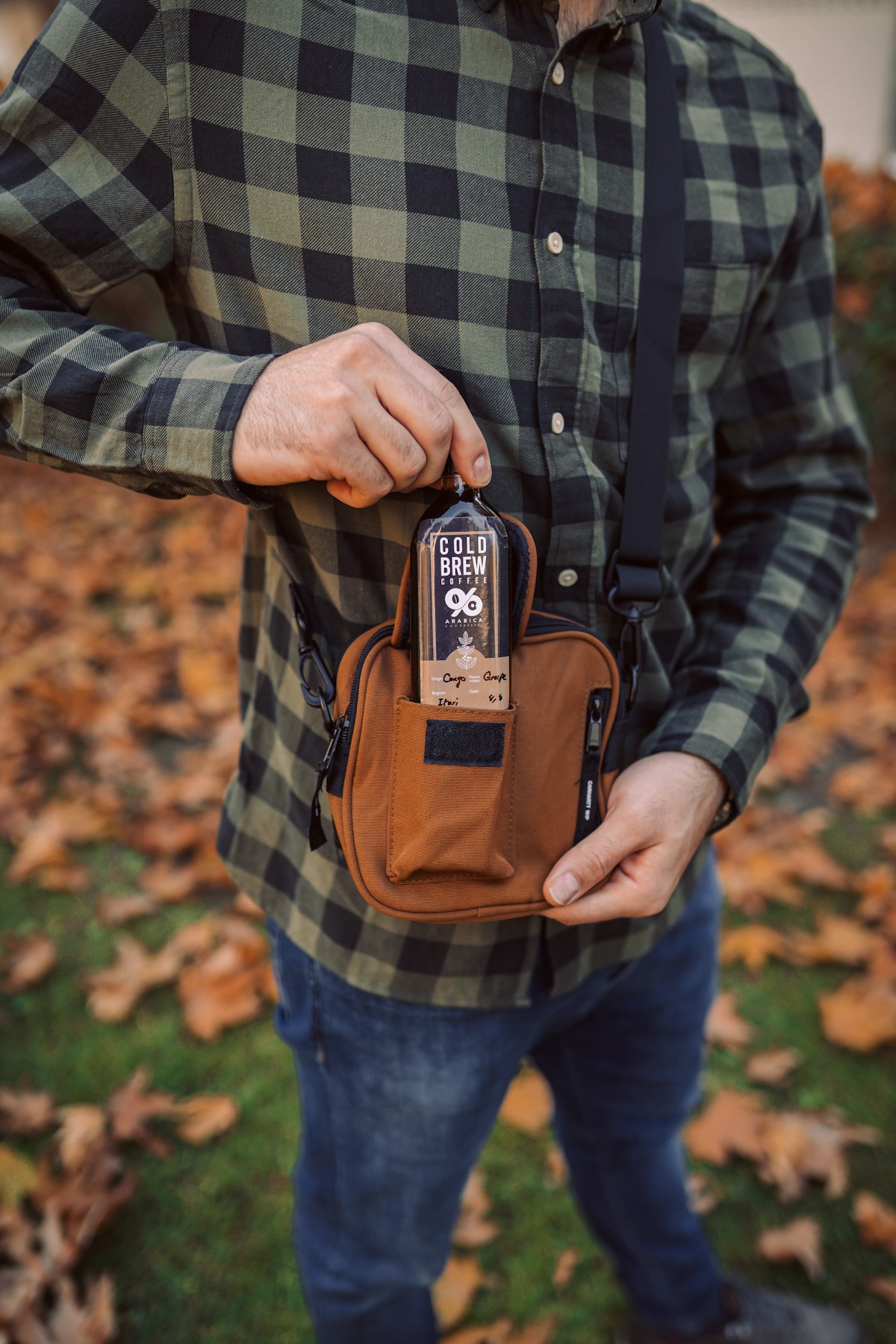
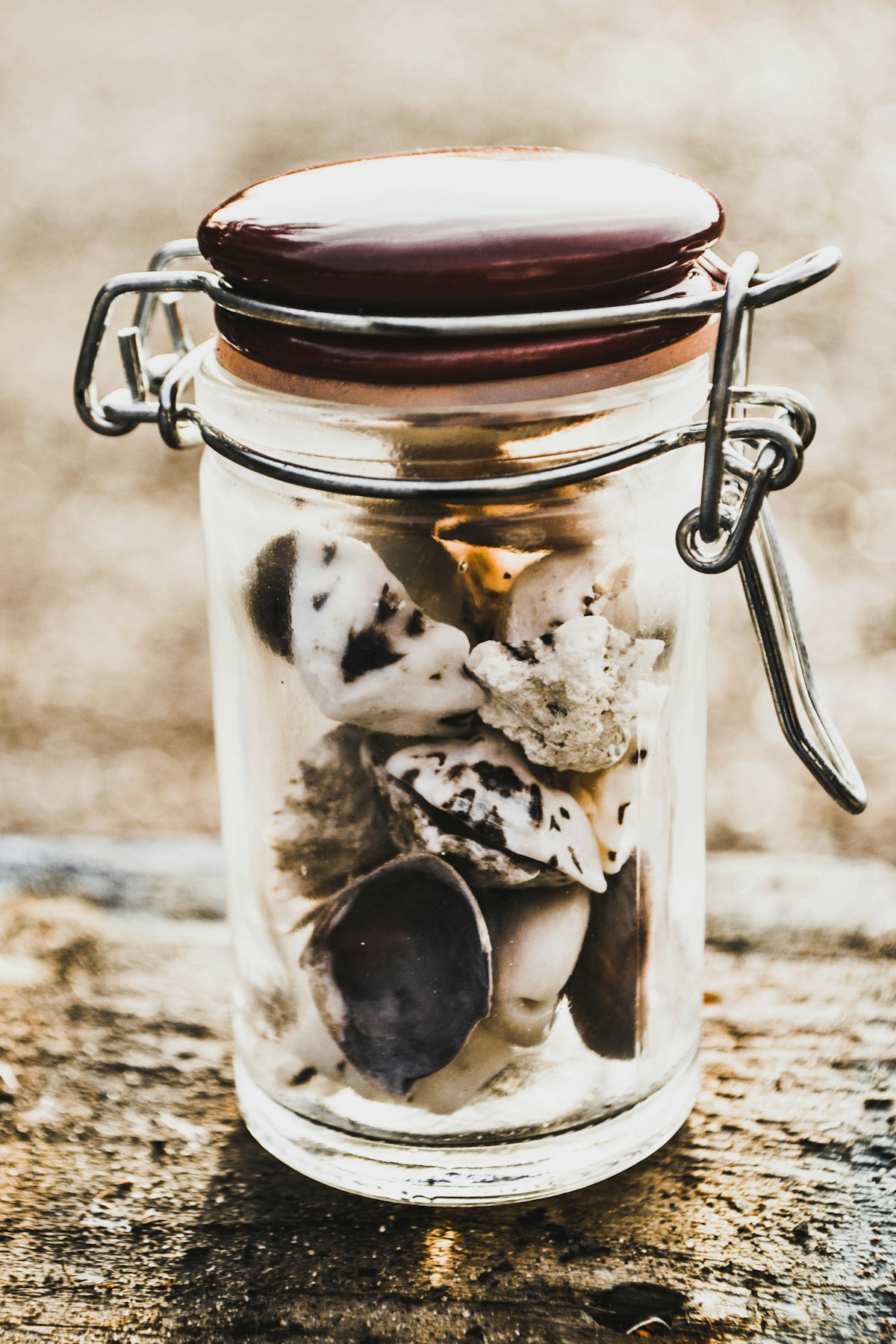
A treat pouch clipped to your belt keeps rewards easy to reach. A sealed jar or container keeps treats fresh and out of reach.
Timing is everything
Give the reward within a second or two of the right behavior. Say a marker word, such as "yes", and then deliver the treat.
Fade the treats
As your dog learns, reward less often and mix in praise and play.
Store them
Keep treats in an airtight container, away from heat and damp, and check the expiry date.