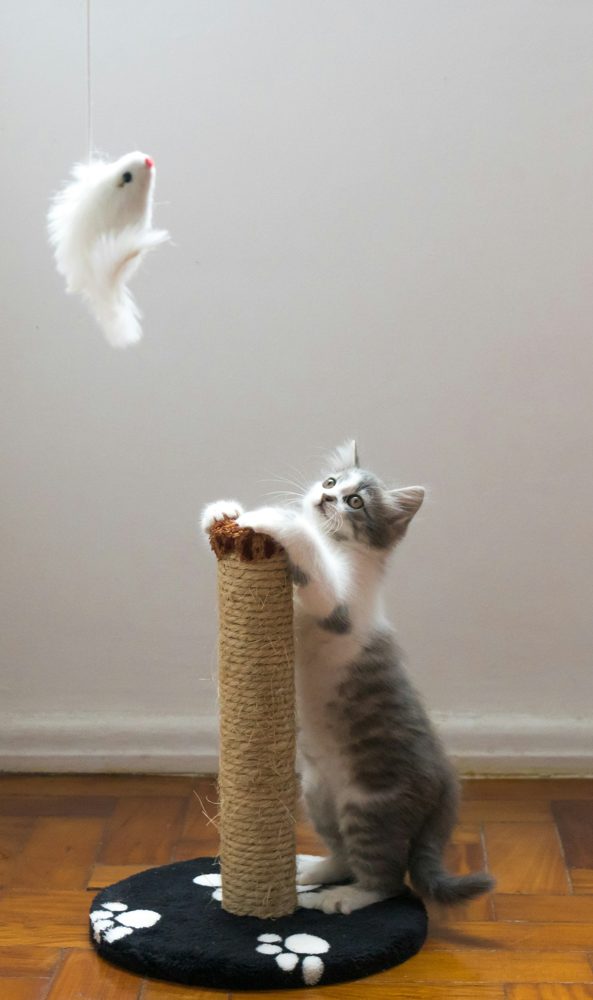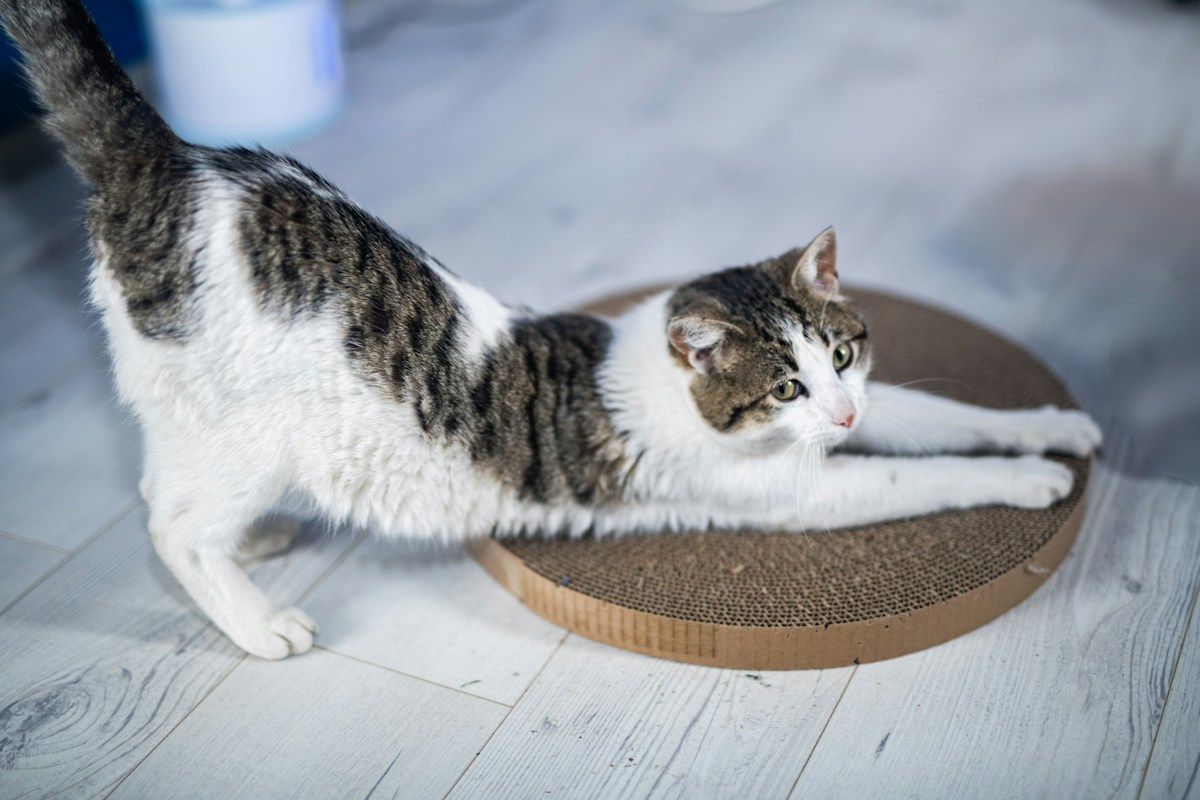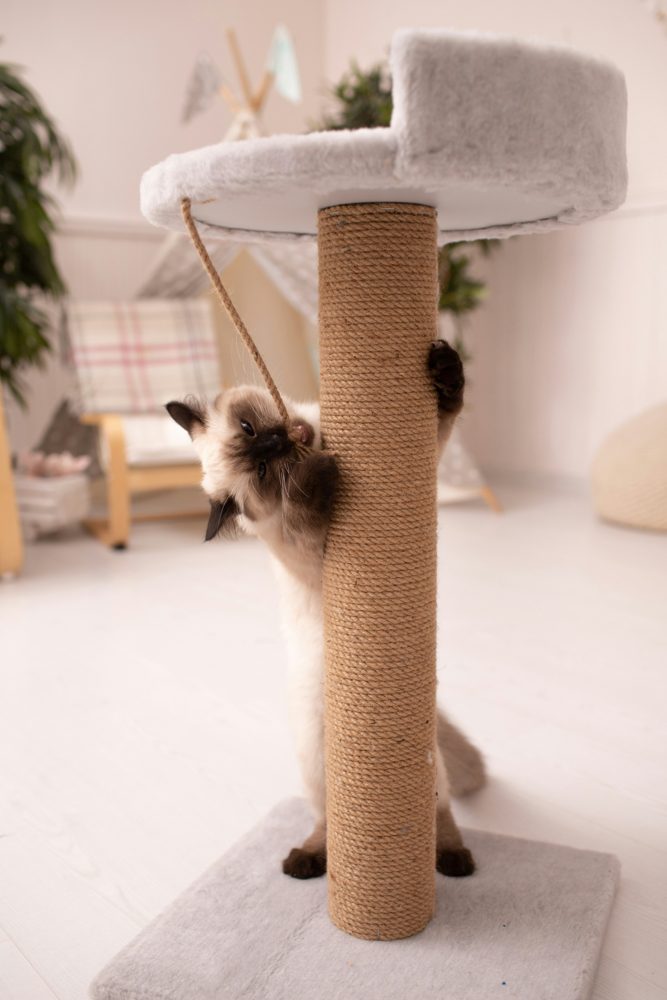
Scratching is normal cat behavior. It stretches the body, marks territory and keeps claws in shape. A good scratching post gives your cat a better target than the sofa. The details of height, base and material decide whether it gets used.
Height and stability
A post should be tall enough for your cat to stretch fully, usually 30 inches or more for adult cats. It must also be stable, because a wobbling post puts cats off. Look for a wide, heavy base.
Materials
- Sisal rope is durable and popular, with a texture that cats like to grip.
- Sisal fabric works well on flat scratchers and wall panels.
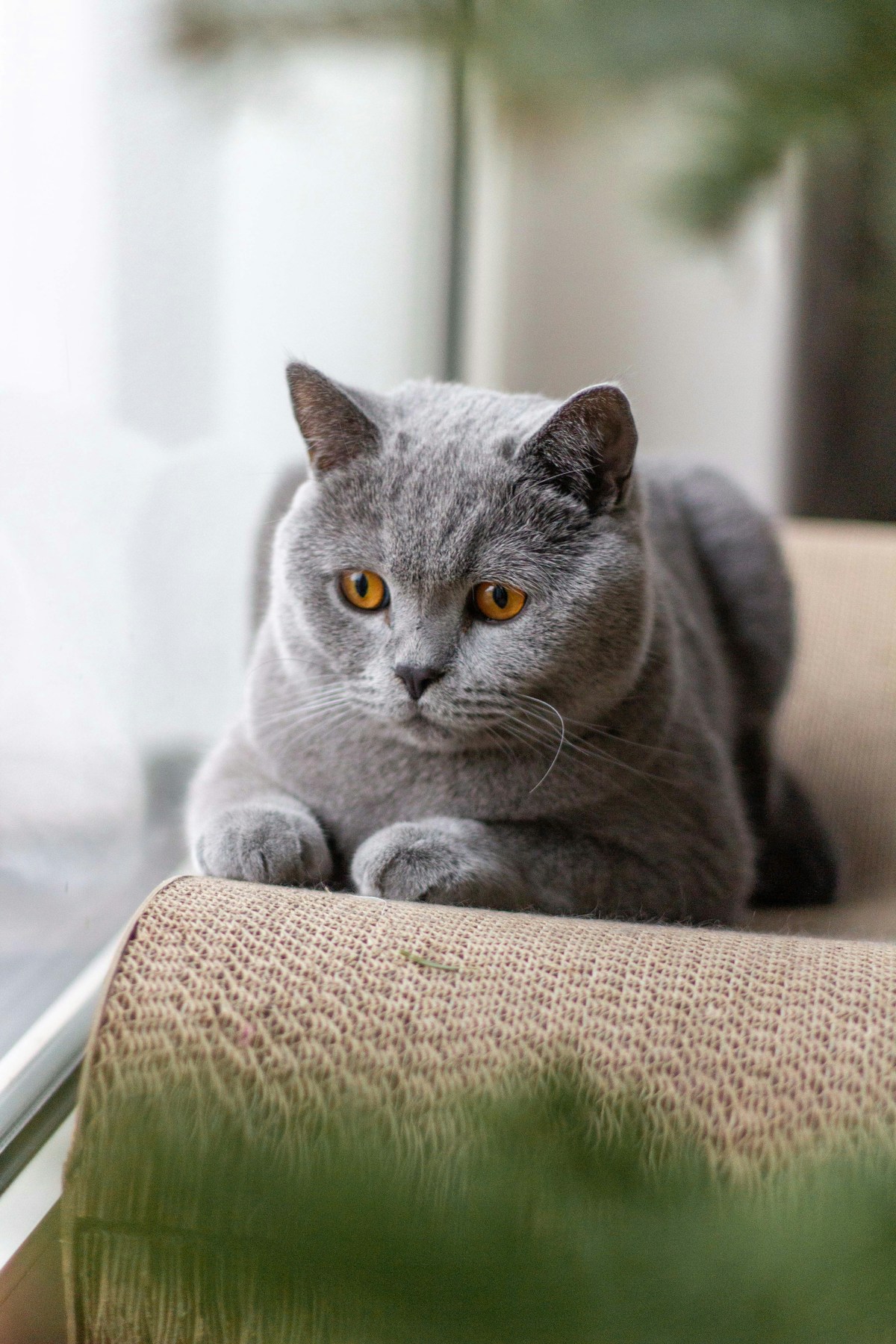
- Cardboard is inexpensive and many cats love it, though it wears out and makes a mess.
- Carpet is common, but some cats then scratch the home carpet, so it is best avoided.
Vertical or horizontal
Some cats like to stretch upward, and others prefer scratching on a flat surface. Watch where your cat scratches now, and match it. A mix of both is often the best way to find out.
Where to put it
Place the scratcher where your cat already scratches, or near a sleeping spot, as cats often stretch after waking. A post hidden in a corner is less likely to be used.
Encourage use
Rub a little catnip on the post, or play with a toy next to it. Praise your cat when they scratch it. Cover the furniture with a throw or a double-sided tape for a while.
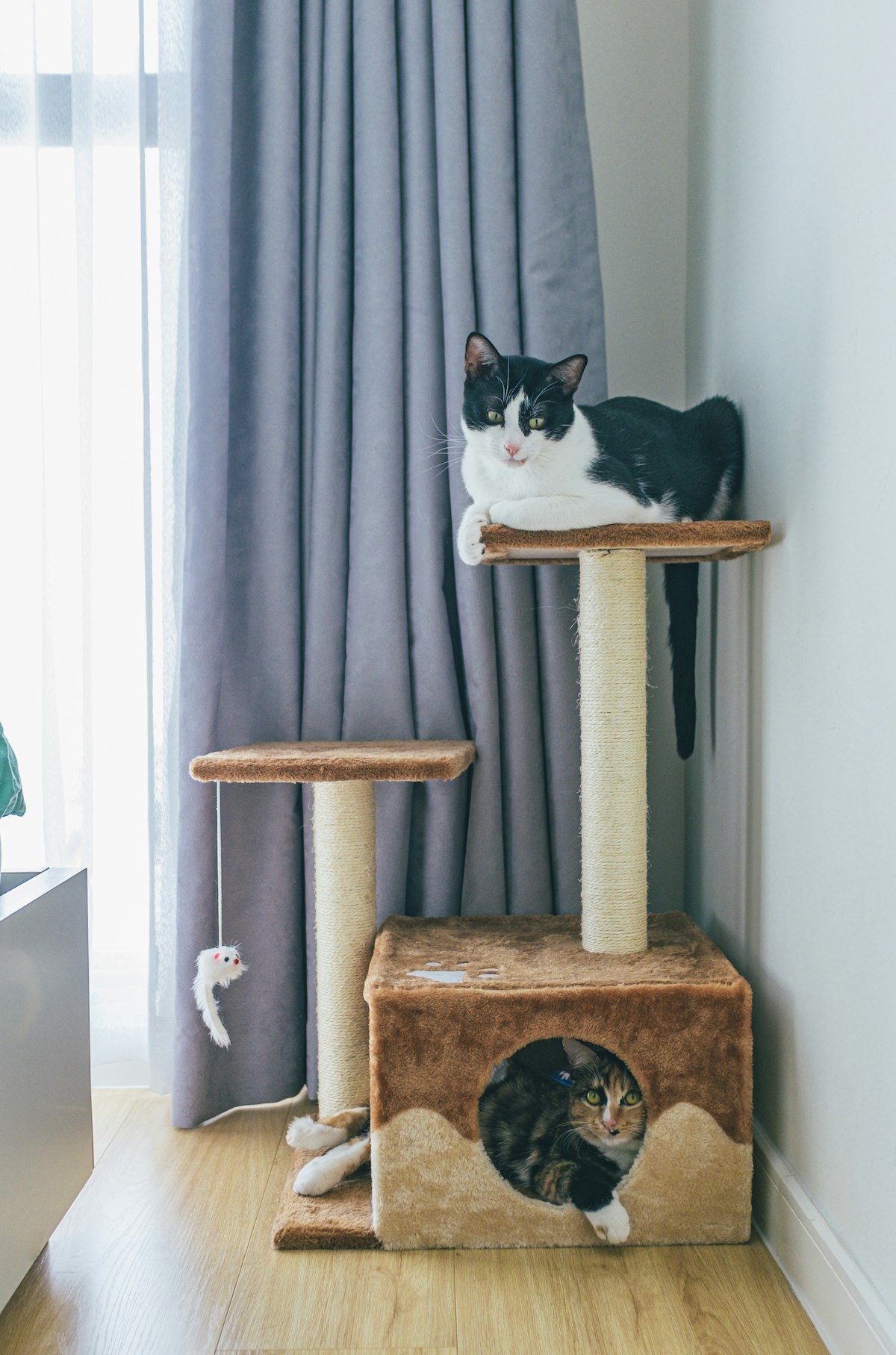
A cat tree for scratching and climbing
A cat tree can combine scratching, climbing and resting. Choose one with sisal-wrapped posts and a solid base.
Replace worn scratchers
When the sisal is shredded or the post leans, replace it. Many cats prefer a rough surface.